Mold Removal in St. Petersburg, FL
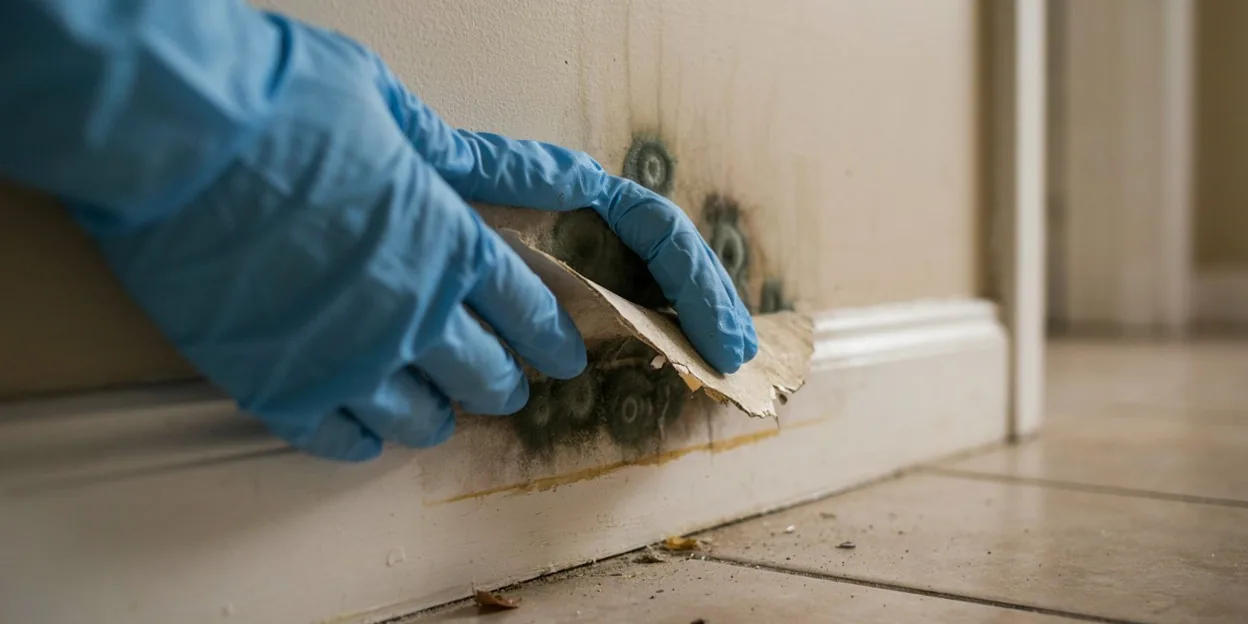
You slid the washer out to check a hose and found a gray bloom along the bottom of the laundry room wall, right about where the bay water stood after Helene. The drywall gives a little when you press it. You want it out of the house, and you want someone to tell you how high the cut line will run. This site connects you by phone with an independent local provider who does mold removal in St. Petersburg and across Pinellas County.
Reading the laundry room wall before the first cut
The crew starts with a moisture meter on the lower three feet of every wall in the room, then the next room, because surge water does not respect doorways. They check cabinet toe kicks, closet floors, and the bottom of any built-in. Where the readings stay high, they mark the wall. That mark, not the stain, sets the cut line.
Then they build containment. The doorway gets plastic sheeting with a zipper, the supply and return grilles in the room get taped, and a HEPA air scrubber runs with its exhaust hose out a window. The room goes under negative pressure, so air flows into the work zone and not out of it toward the bedrooms.
Leave the drywall alone and keep the AC running
Do not pull the wet drywall yourself. Tearing a moldy board out with no containment sends dust through the whole house. Close the door, keep kids and pets out, and set the thermostat fan to auto so the system is not pulling air from that room all day.
Skip the bleach; it wets the paper face and never reaches the growth inside the board. If a supply line or a water heater is still leaking, shut the valve. Photograph the growth and the water line before anything is touched.
Drywall and insulation out, block and slab cleaned where they stand
Porous materials that got wet and grew mold come out: drywall, baseboard, batt insulation, carpet pad, and the particleboard bottoms of cabinets. Drywall is cut a set margin past the last high reading, and the pieces are bagged inside the containment before they leave the house. Concrete block, the slab, metal studs, and solid wood framing can usually be cleaned and dried in place.
After removal the crew HEPA vacuums and wipes every surface in the zone, then runs dehumidifiers and air movers until the block and framing read dry. Fixing the source is part of the scope, whether that means a plumber, a roofer, or a threshold raised at the garage door. If the growth runs through more than one room, see whole-home mold remediation. If the damp started in a bathroom, see bathroom mold removal.
Salt water, Chapter 468, and what Helene left in Pinellas walls
Florida's Chapter 468, Part XVI treats mold assessment and mold remediation as two trades with two separate licenses. For growth larger than ten square feet, the company that assessed your home may not remediate it within twelve months. Look up the remediator's license at myfloridalicense.com and ask for a written scope before work starts.
Most houses in Shore Acres, Disston Heights, and Pinellas Point are concrete block on a slab a foot above grade. On September 26, 2024, Helene pushed a surge past six feet into St. Petersburg, and bay water went into those walls through garage doors and sliders. Salt water is the hard case: the salt left in the block keeps drawing moisture from the air, so a wall can read wet months after the house was pumped out.
Many Florida policies cap mold at a fixed dollar amount, and surge usually falls under a flood policy rather than the homeowner policy. Ask your adjuster before the work starts. When drywall goes back, the rebuild usually needs a permit from the City of St. Petersburg or from Pinellas County in unincorporated areas; the contractor who rebuilds pulls it. If you want an independent check before the wall is closed, a licensed assessor separate from the remediator can do one, and the crew's readings give that assessor a starting point.
When you call about the laundry room wall
Have the address ready, along with how high the water got, how large the visible growth is, and what wet the wall if you know. Mention any assessor's report you have in hand, and tell them whether the water is shut off or still coming in. Call (727) 382-7755.